
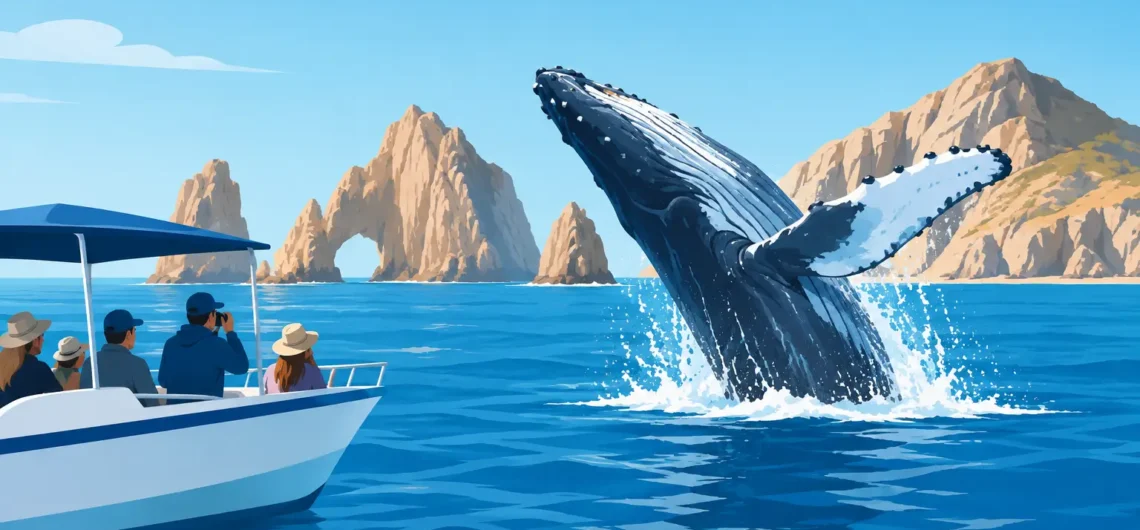
A humpback can launch its full body out of the Pacific without warning, turning a quiet Cabo morning into the kind of vacation moment everyone on board talks about for years. Whale watching Cabo San Lucas puts you at the meeting point of the Pacific Ocean and the Sea of Cortez, where dramatic coastline, clear winter light, and seasonal whale migrations create an unforgettable day on the water.
For couples, families, cruise guests, and friend groups with limited vacation time, a dedicated whale watching trip is one of the smartest ways to experience Cabo beyond the beach. You get iconic views of Land’s End, a front-row seat to Baja marine life, and a chance to see the region at its wildest – all without needing diving experience or a full-day expedition.
When Is Whale Watching Season in Cabo San Lucas?
The main whale watching season in Cabo San Lucas generally runs from mid-December through mid-April. Humpback whales are the stars of the season, arriving in Baja waters to breed, give birth, and care for their calves. Depending on conditions and timing, visitors may also spot gray whales, dolphins, sea lions, rays, and seasonal seabirds.
January through March is often the sweet spot for travelers who want the strongest chance of frequent whale activity. By late winter and early spring, mother-and-calf pairs are commonly seen, and the whales can be especially active at the surface. Breaches, tail slaps, fin waves, and powerful blows are all possible, but wildlife never works on a schedule. A great captain and crew improve your chances by reading the water, communicating with other boats, and knowing the usual travel routes.
December is a beautiful choice for holiday travelers and early-season visitors, though sightings can be less consistent than in the heart of winter. April can still deliver excellent encounters, especially earlier in the month, but it is also when the migration begins to shift north. If seeing whales is a must-do rather than a nice bonus, schedule your tour early in your stay. That gives you room to rebook if weather affects a departure.
Choosing the Right Whale Watching Cabo San Lucas Tour
The best boat depends on the kind of Cabo day you want. A shared whale watching excursion is a lively, accessible option for solo travelers, couples, and families who want expert guidance without arranging a private vessel. It is also an easy fit for resort guests and cruise visitors looking to make the most of a few hours ashore.
A private charter offers a different kind of freedom. Your group can enjoy a more personal pace, celebrate a special occasion, choose a departure time that works for your itinerary, and pair wildlife viewing with sightseeing around the Arch. Private boats are especially appealing for multigenerational families, photography-focused travelers, and groups that prefer extra room and flexibility.
Morning trips are often a strong choice because the water may be calmer and the air is cooler. That said, an afternoon departure can be ideal if you want a relaxed morning at the resort or plan to roll your outing into a sunset cruise. Ocean conditions change daily, so the best time is ultimately the one that matches the forecast, your comfort level, and your group’s schedule.
What a Great Tour Should Include
Look for a professionally operated experience with a knowledgeable local crew, safety equipment, and a vessel suited to your group size. Many departures include bottled water, and some may offer snacks, drinks, photography opportunities, or transportation options. Confirm the exact duration before booking, since whale watching trips can range from a quick outing to a longer coastal adventure.
The most memorable tours do more than chase a sighting. A good guide explains what you are seeing: why a whale may slap its tail, how calves stay close to their mothers, and what makes Cabo such an important seasonal habitat. That context turns a spectacular photo into a real connection with Baja California Sur.
What You May See on the Water
Humpback whales are famous for their enormous pectoral fins, expressive surface behavior, and breathtaking breaches. On some days, you may spot a whale from far away by its misty blow. On others, a pod may surface nearby, offering clear views of dark backs, flukes, and calves swimming alongside their mothers.
Dolphins are frequent bonus sightings around Los Cabos, and playful pods may race beside the boat or leap through the wake. California sea lions often rest near rocky points and around the Land’s End area, adding another layer of wildlife to the experience. In the right conditions, you may also see flying fish, sea turtles, or schools of baitfish flashing beneath the surface.
Every departure is different. A day with repeated breaches can be thrilling, but a quieter day with a mother and calf slowly surfacing together can be just as powerful. The goal is not to force an encounter. It is to observe a remarkable migration responsibly, from a respectful distance, in one of Mexico’s most scenic coastal settings.
What to Wear and Bring for a Comfortable Ride
Cabo can feel warm on land while the ocean breeze feels cool, especially on early departures between December and March. Wear light layers, comfortable non-slip shoes, sunglasses, and a hat that will stay secure in the wind. Reef-safe sunscreen is a smart choice, even on cloudy days, because the Baja sun reflects intensely off the water.
Bring your phone or camera, but keep it protected from spray. A wrist strap or waterproof pouch is useful if you plan to photograph near the rail. If motion sickness is a concern, take your preferred remedy before boarding rather than waiting until the boat is moving. Choose a larger, more stable vessel when available, keep your eyes on the horizon, and avoid starting the day with a heavy meal.
Families should check age guidance and boat amenities before reserving. Whale watching can be excellent for children because the action is immediate and there is no special skill required, but younger guests may be more comfortable on a shorter trip with shade, seating, and easy access to refreshments.
Make the Most of Your Cabo Wildlife Day
Whale watching fits easily into a bigger Los Cabos itinerary. Start with a morning wildlife cruise, then spend the afternoon at Medano Beach, explore the marina, or enjoy a relaxed lunch with views of the water. If your group wants more time offshore, consider combining your whale watching day with a private sailing experience, coastal sightseeing, or a sunset cruise when conditions and schedules allow.
It also helps to think beyond the photo. Keep your camera ready, but do not spend the entire tour looking at the moment through a screen. When a whale surfaces nearby, take a few images, then lower the phone and listen. The sound of a blow across calm water and the sudden splash of a breach are details no photo fully captures.
Responsible Viewing Makes the Experience Better
Whales are wild animals, and the best operators follow viewing guidelines designed to reduce stress and give animals room to move naturally. Boats should not crowd, touch, feed, or cut off whales. Captains may slow down, change position, or wait patiently rather than pushing closer, particularly when calves are present.
That patience is part of what makes a quality excursion worthwhile. Respectful viewing protects the animals and often leads to more natural behavior – the kind of encounter that feels exciting because it happened on the whales’ terms, not ours.
Cabo Paradise Tours can help travelers choose a seasonal whale watching experience that fits their group, schedule, and preferred level of comfort. Book early during peak winter dates, build a little flexibility into your plans, and let Baja’s biggest visitors set the pace for a remarkable morning at sea.